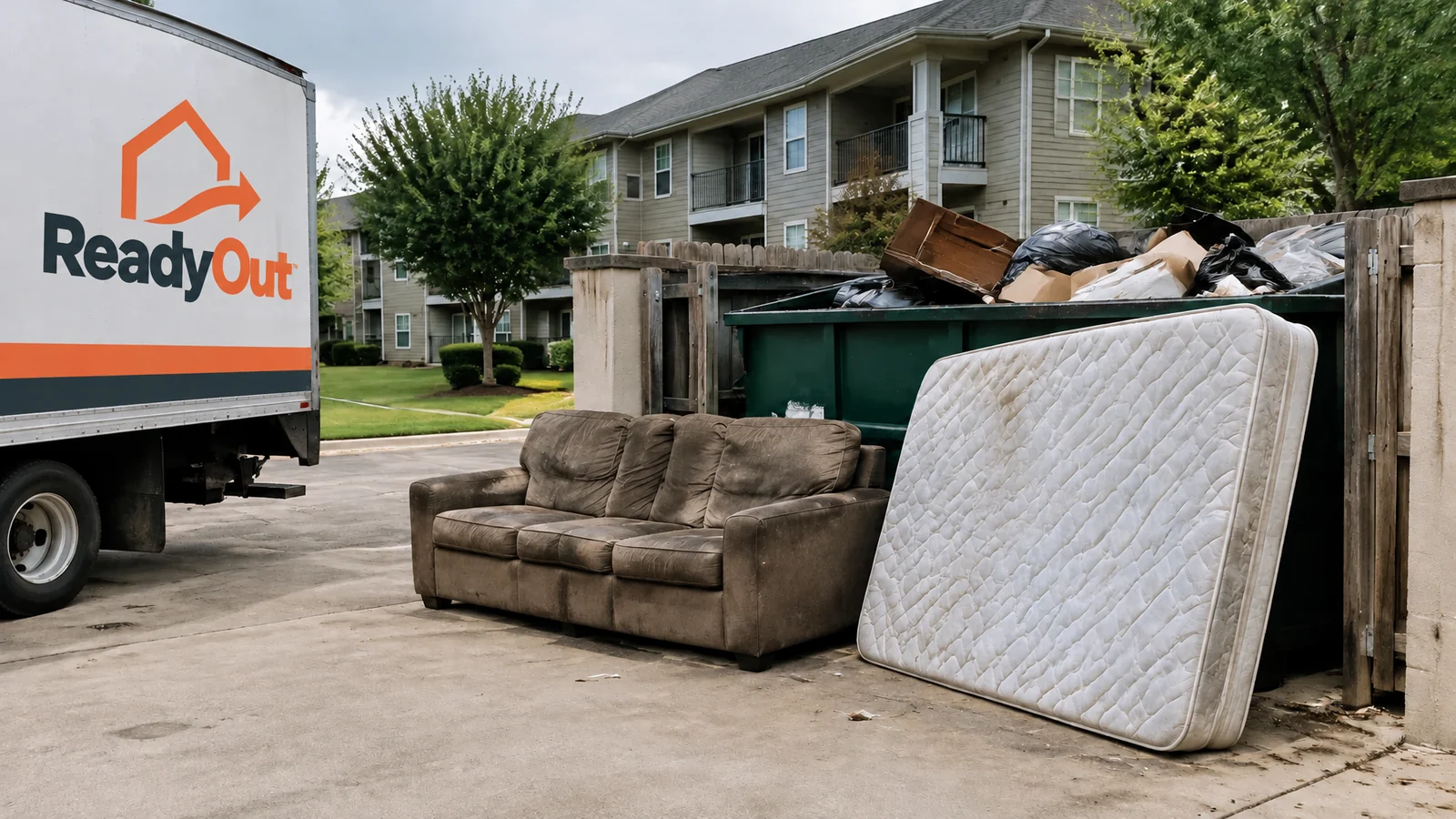
Six kitchen bags and a mattress are sitting outside the dumpster enclosure on Monday morning. Looking at the photo, a manager might reasonably approve another Saturday trash collection. Then the porter adds one detail. Saturday's truck came, and the dumpster was still half empty on Sunday. What would an extra collection have picked up?
"Apartment dumpster overflow" is an easy label to put on a work order. A container can fill up, a bulky item can block its opening, or a truck can miss its stop. Code all three the same way and you can buy another weekly collection and still find a mattress in the same spot next Monday.
Read the enclosure before you change the contract
On the next two collection days, use the team's usual grounds walk to capture the same view before and after service. Record which enclosure it is, whether residents can reach the opening, how full the container looks from outside and which items are on the ground. Check the actual service time against the route schedule. A photo taken an hour before collection tells a different story from one taken an hour after.
When loose bags fill a container with a clear opening, ask the hauler to compare collection days with the days volume peaks. When a sofa blocks a container that still has room, check whether a resident can find and book furniture pickup before moving it downstairs.
When the container looks untouched after a scheduled haul, call dispatch with the enclosure number, service window and photos. Ask for the driver's stop record. A locked gate calls for corrected access instructions and a return trip. A stop missing from the route calls for a recovery pickup and a routing correction. Get the return window in writing and confirm the container was emptied before closing the work order.
Give residents an answer while the mattress is still upstairs
Who arranges pickup, who pays, and where does the mattress stay until collection? The right answer can be local. Seattle Public Utilities tells apartment residents to ask their property manager or building owner to schedule furniture and bulky-item collection. A flyer telling every resident to call the city sends a Seattle renter to the wrong person. Seattle Public Utilities guidance for apartment residents
At a participating ReadyOut community, residents can photograph furniture they own, review the price and select an available pickup. Their confirmation tells them how to prepare. Put the community-specific link in the instructions residents receive while the mattress is still upstairs.
For wording your leasing team can use, see the apartment move-out email template.
Walk the same enclosure after the next comparable move-out weekend. If furniture disappears but household trash still fills the container, take the photos and service times to your hauler. If bags stop piling up once residents can reach the opening, you have a reason to hold off on that extra weekly charge.
About ReadyOut
ReadyOut
ReadyOut helps multifamily operators introduce proactive resident removal before move-out, with separately approved, priced and paid support for the removal work that remains. The service is built around protecting maintenance capacity, reducing maintenance time and giving communities clearer visibility into an often overlooked part of apartment operations.